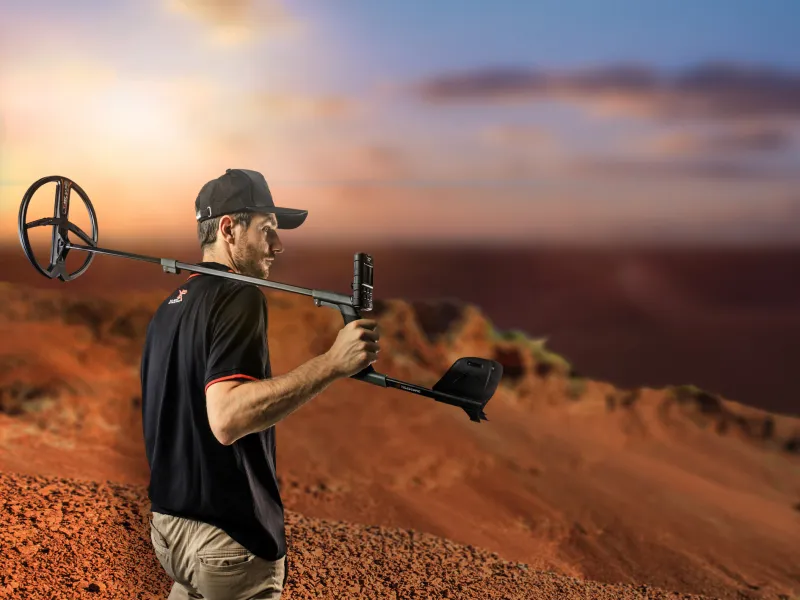
Hobby guide for metal detectorists & Treasure hunters
Metal detecting in Germany
Hobby guide for treasure hunters
Everything you need to know: getting started, equipment, find spots, the current legal situation in each federal state, code of conduct and pro tips – compact, honest and complete. By detectorists for detectorists.
Why metal detecting?
The fascinating hobby combining history, exercise and the spirit of discovery
Searching for historical objects with a metal detector is one of the most exciting pastimes for anyone interested in history. Germany's soil holds traces of vanished cultures – from Celts, Romans and Germanic tribes to medieval merchants and the turmoil of the Second World War. The Tumulus culture, Vikings and many others have left valuable items in our soil. Much of it has never been found again. This hobby combines historical research, exercise in the fresh air and the unforgettable experience of recovering an object that has rested untouched in the ground for centuries.
How to get started in 4 steps
Research & preparation
Historical maps, the federal states' geoportals, aerial photos and LiDAR data provide clues to promising search areas. Local chronicles, archives and local historians are also invaluable sources.
Obtain permission
Before every search: ask the landowner and, if necessary, apply for an official search permit (Nachforschungsgenehmigung, NFG). This is not an obstacle but the basis of serious work.
Search systematically
Search in parallel lanes with overlap. Pay attention to soil conditions and weather. Record the GPS coordinates, photos and depth of every find.
Report finds
Report archaeologically significant finds to the responsible heritage authority immediately – with a photo and coordinates. Cooperation pays off; there are often finder's rewards.
What makes the hobby so special?
History up close
Every find tells a story. A coin, a buckle, a button – all were once part of someone's life. You hold a piece of the past in your hands that has lain untouched for centuries.
Exercise & nature
Hours in the fresh air, often on wide fields or in quiet woods. Metal detecting is healthy, relaxing and the perfect balance to everyday life. You see landscapes from a new perspective.
Community
Detectorist clubs, online forums and regional meet-ups offer exchange, joint searches and mutual support with permits or identifying finds. Hobbies turn into friendships.
Citizen Science
Responsible detectorists are a real asset to archaeology. Many important finds of recent years were made by hobby detectorists and made accessible to science.
Documentation
Photograph every find and note its depth and GPS position. A modern smartphone and apps such as XP GO Terrain make documentation easy. Scientific value only arises through context.
Cleaning & care
Clean as little as possible! The patina bears witness to the object's age and protects the metal. It is better to have valuable pieces conserved by professionals than to damage them yourself.
The best Find spots
What you can search for where – and what you should bear in mind
Careful preparation with historical maps, aerial photos, LiDAR data and archive research makes the difference between success and failure. The better your research, the more targeted – and legally secure – your search will be. Free sources: the federal states' geoportals, BayernAtlas, ordnance survey sheets (Messtischblätter) in the SLUB archive, oldmapsofgermany.de.

Arable fields
The main search area for the majority of detectorists. Deserted villages, militaria, coins from all eras – the range of finds is greatest here. Best time: after the harvest and in spring, when fields have been ploughed.
Farmer's permission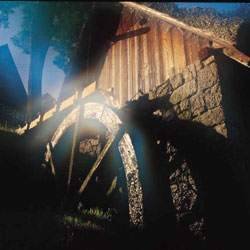
Old mills
Millers were wealthy, respected people. Busy delivery traffic and manual work mean a higher rate of finds of historical coins and everyday objects. Particularly productive: the area around the access routes.
Obtain permission
Old trees & clearings
Prominent solitary trees along paths or in clearings served as meeting points, resting places and landmarks. Often historical meeting places where coins were lost.
Permission required
Hills & viewpoints
Common locations of historical watchtowers and early warning systems. Linked by lines of sight to other towers – important nodes of old communication networks.
Permit required
Old bridges & fords
Romans threw coins into the water with good wishes when crossing bridges. At fords on historical routes, travellers rested and watered their horses – rich find spots.
Check permit requirements
Wells & jetties
Ideal for retrieval magnets. Wells: weapons, ammunition, historical coins, tools. Jetties: fishing hooks, engine parts, lost items of all kinds. Caution: magnet fishing now requires a permit in many places.
Get a permit for magnet fishing
Castles & ruins
Castle ruins are usually protected as archaeological monuments – searching here is only allowed with an express special permit. The surroundings outside the ramparts can be more rewarding and easier to access legally.
Archaeological monument – special permit!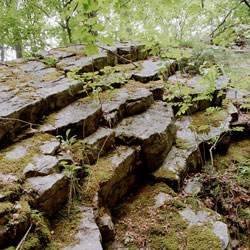
Rocks & menhirs
Common places of worship and sacrifice, meeting points and ancient observatories. The full range of finds is possible, with an increased likelihood of prehistoric finds from the Bronze and Iron Ages. Often registered as archaeological monuments.
Check protection status!
Old cellars & half-timbered houses
Very interesting during renovations, with the owner's consent. Old vaulted and wine cellars yield rare finds. The walls should also be searched with the detector – hiding places from times of hardship.
Owner's consent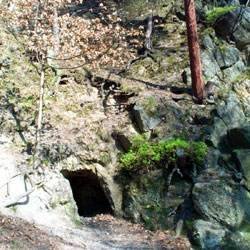
Caves & rock overhangs
Ancient places of shelter, sacrifice, burial and hidden treasure. The furthest corners are particularly promising. Caution: Avoid from October to April – bats hibernate there and are strictly protected.
Observe nature conservation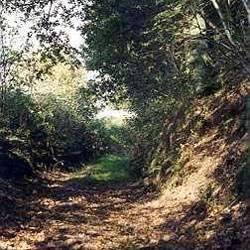
Sunken lanes & trade routes
Germany is criss-crossed by old, disused sunken lanes. Once busy trade routes – the range of finds goes back to the Bronze Age. Deep cuttings reveal how intensively they were used.
Get a permit
Springs & bogs
Places of sacrifice dedicated to Germanic gods. Offerings were made here until the early Middle Ages. Very high probability of prehistoric metal objects – but usually protected as an archaeological monument or nature reserve.
Usually protected!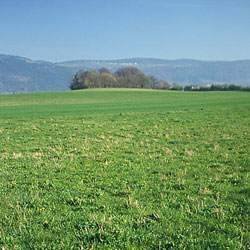
Old battlefields
Rich finds: militaria, coins, badges, identity tags, buttons. Take special care with ammunition finds! If in doubt, do not dig, keep your distance and call the police and the explosive ordnance disposal service.
Ammunition: extreme caution!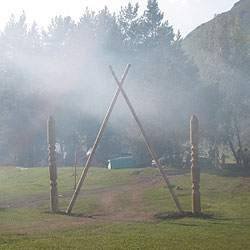
Playgrounds & fairgrounds
Probability of finds almost 100 percent. Modern coins are practically guaranteed. A lot of junk means patience is required – good practice areas for beginners to learn how to use the detector.
Usually allowed without NFG
Beaches & bathing lakes
Probability of finds almost 100 percent – coins and lost jewellery are the rule. Experienced detectorists have paid for their holidays this way. Historical beach finds washed ashore are also possible.
Top tip for beginnersLegal matters & permits
What detectorists in Germany need to know in 2026
In Germany, heritage protection law is the responsibility of the 16 federal states. The regulations differ considerably. Always check with the State Office for Heritage Preservation (Landesamt für Denkmalpflege) of your federal state before you start detecting. If in doubt: better to ask once too often than risk a fine.
For decades, Bavaria was considered the most detectorist-friendly federal state, with no state ownership of finds (Schatzregal). Since 1 July 2023, however, a Schatzregal has applied there too (Art. 9 BayDSchG). Movable archaeological monuments become the property of the Free State of Bavaria upon discovery. However, there is still no general search permit in Bavaria as there is in other states.
Prohibited – never do this
- Searching without the landowner's permission
- Digging in nature reserves without a special permit
- Searching on registered archaeological monuments without an official NFG
- Searching without a search permit in 15 of the 16 federal states
- Concealing finds or giving false find locations
- Failing to report significant finds (punishable in all federal states)
- Digging up or moving ammunition finds yourself
- Searching on sown fields or plantations
The right way
- Obtain written permission from the landowner
- Apply for a search permit from the heritage authority
- Take part in training courses in your federal state (e.g. Lower Saxony, Schleswig-Holstein)
- Document the GPS coordinates of all finds
- Report significant finds to the heritage authority promptly
- Refill holes completely and level them
- Report ammunition found to the police and the explosive ordnance disposal service
- Actively maintain contact with your local heritage authority
Schatzregal – who owns what?
- A Schatzregal now applies in all 16 federal states: archaeological finds belong to the state
- Since 1 July 2023, the Schatzregal has also applied in Bavaria (Art. 9 BayDSchG)
- The so-called Hadrianic division under Section 984 of the German Civil Code (BGB) now only applies to treasure finds that are not archaeological monuments
- For non-archaeological finds: often half to the finder, half to the landowner
- The obligation to report always applies everywhere – in every federal state
- Cooperative working often leads to finder's rewards
Penalties & consequences
- Searching without a permit: fines of up to €50,000 are often possible
- “Illegal excavation”: criminal complaint, confiscation of equipment
- Concealing significant finds: punishable under state law
- Damage to archaeological sites: civil liability for damages
- No renewal of the NFG in the event of violations
- Repeat offenders: criminal proceedings and an entry in the criminal record are possible
Regulations by federal state
If you search a public playground, beach or bathing lake for lost everyday objects (keys, jewellery, modern coins), you usually do not need an official search permit – but you always need the permission of the owner or operator. As soon as you deliberately search for historical or archaeological finds, however, an NFG is required in 15 of the 16 federal states.
The right Equipment
What you really need – from essentials to pro tips
Metal detectors
Digging tools
Documentation
Clothing & other items
Metal detector comparison at a glance
| Model | Price | Target group | Special feature | Frequency |
|---|---|---|---|---|
| Nokta Simplex 2 | ~ 300 € | Beginner | Waterproof, simple | Single |
| Garrett Ace Apex | ~ 450 € | Beginner+ | Multi-Flex, light | Multi |
| Quest V80 | ~ 550 € | Advanced | Bluetooth, light | Multi |
| Nokta Legend | ~ 750 € | Advanced | Waterproof 5 m | Multi |
| Minelab Equinox 900 | ~ 1.150 € | Advanced | Multi-IQ technology | Multi |
| XP ORX | ~ 700 € | Advanced | Wireless, HF-capable | Single/HF |
| XP DEUS II | ~ 1.440 € | Pro | Fully wireless, FMF | Multi/FMF |
| XP ICON | ~ 499–699 € | Advanced | Wireless, coil IP68/5 m | Multi/FMF |
| Minelab Manticore | €1,999 | Pro | 2D Target Trace | Multi |
Technique & practical tips
From settings to search technique – what really counts
Detectorists' code of honour
13 rules for responsible metal detecting
Germany is a small country with many people interested in history. Trusting cooperation between detectorists and heritage authorities is the only viable path to success. Well-trained detectorists with their metal detectors are a real opportunity for archaeology – if they act responsibly and according to these principles.
- 1Cooperation with the heritage authority
Build a cooperative relationship with your heritage office. Attend the seminars offered in your federal state and use your metal detector responsibly.
- 2Open up new search areas
Look for new search areas instead of searching at known cultural monuments. Give current excavation protection areas and ongoing archaeological excavations a wide berth.
- 3Permission before searching
Always ask for permission if you want to search on private land. Experience shows that landowners usually do not mind and even help with the search.
- 4Respect for other detectorists
Do not search areas that other detectorists are already working without asking. Ask whether you can search together with them.
- 5GPS documentation
Always record archaeologically relevant finds with GPS and report them promptly with a photo and GPS data to the responsible archaeologists. Also look out for pottery and stone artefacts.
- 6Awareness of history
Every intervention in the archive in the ground removes a piece of the puzzle of our history. Document, research and preserve for the general public. Important finds belong in a museum.
- 7Environmentally conscious searching
Always take a rubbish bag with you. Collect any rubbish you find and dispose of it properly. Metal detecting and environmental protection are not a contradiction – quite the opposite.
- 8Refill holes completely
Refill all holes you have dug completely. Open holes are traps for small animals and can even cost deer their lives. Leave no trace.
- 9Protect crops & plantations
Never walk on or search sown fields and plantations. Damage to agricultural land is legally problematic and harms the reputation of all detectorists.
- 10Friendliness & composure
Always remain friendly when people speak to you while you are treasure hunting – even if they are not well disposed towards you. Ignore informers if you are in the right.
- 11Honesty when searching together
When searching together, show every find and do not hide anything from your partner. Trust is the basis of any good search group. Be a good friend.
- 12No false information about find spots
Do not give false information about find spots. Experienced archaeologists can tell from the patina and soil residues whether a stated find spot is correct. False information will cost you your NFG.
- 13Report ammunition finds immediately
Report ammunition finds immediately to the police or the explosive ordnance disposal service. Never dig up ammunition. Mark the spot, keep your distance and report it without delay.
Frequently asked questions
The most important questions from beginners – answered honestly
Ready for your first adventure?
Get personal advice – which detector suits you, your search locations and your budget? Our team will advise you competently and independently of any manufacturer.
Contact
Metalldetektoren.de
Andreas Licht
Professor-Derra Str. 3
96465 Neustadt b. Coburg
Germany
Our service
Information
- Delivery time
- Payment & shipping
- My quick purchase
- Privacy and data protection
- Authenticity of customer reviews
- Terms and conditions
- Battery Act notice
- Cookie settings
Our brands