
Cleaning & conserving
finds from the ground
The find is finally in your hand – now the right care decides whether a treasure is preserved for decades or slowly falls apart. A practical guide by detectorists for detectorists.
Why first aid is decisive
Finds have often spent decades, sometimes centuries, in the soil and have reached a chemical equilibrium with their surroundings. If this equilibrium is abruptly disturbed by recovering the object, accelerated decay often sets in.
Done right
- Keep the find dry straight away – do not put it back in damp soil
- Remove coarse dirt mechanically – never scrape
- Determine the material before any treatment
- Conserve immediately after cleaning
- Take archaeologically relevant objects to an expert untreated
Typical mistakes
- "Polishing" coins with your thumb – permanently destroys the patina
- Using acids (vinegar, citric acid) without experience
- Using metal wire brushes on soft metals
- Storing finds unconserved in damp rooms
- Using electrolysis baths without precise knowledge
The proven 3-step process
From first aid in the field to long-term storage – this is how experienced detectorists proceed.
Assessment & first aid in the field
Immediately after the find: roughly identify the material (iron, copper/bronze, silver, lead) and carefully loosen the soil with a soft brush or a wooden stick. Never scrape the surface of a coin with your fingernail or a metal tool. Wrap the find dry in an absorbent cloth or transport it in a coin box.
Cleaning at home – gentle & suited to the material
For most finds, Conservo cleaning fluid has proven itself as the standard product. It chemically dissolves soil crusts and oxidised layers. For stubborn areas, the Le Crayon à André cleaning pencils are used.
Conservation – protection for the decades ahead
The Renaissance Polishing Wax from Picreator Enterprises is regarded as the museum standard: a microcrystalline wax that forms a wafer-thin, invisible protective film and fully preserves the natural patina.
Which method for which metal?
Not every cleaning method suits every material. This overview helps you make the right decision.
| Material | Common finds | Cleaning | Conservation | Note |
|---|---|---|---|---|
| Bronze / copper | Coins, brooches, buckles | Conservo, soft brush, Le Crayon | Renaissance Wax | Bronze disease possible |
| Silver | Coins, jewellery | Conservo (briefly), pencil work | Renaissance Wax | Usually well tolerated |
| Iron / steel | Tools, horseshoes | Mechanical, Owatrol oil | Owatrol oil, Renaissance Wax | No water – rust! |
| Lead / tin | Seals, pilgrim badges | Mechanical only, dry brush | Renaissance Wax (thin) | Protective gloves! |
| Gold | Jewellery, coins | Rinse in lukewarm water, soft brush | Renaissance Wax optional | Very stable |
Bronze & copper – the most common find material
Bronze and copper objects are sensitive to fingerprints. Active bronze disease shows as light green, powdery spots – if you see it, store the find dry immediately and use no water.
- Let Conservo cleaning fluid work for 5–10 minutes
- Rub off with a soft brush or Le Crayon pencils
- Rinse thoroughly (except in cases of bronze disease)
- Leave to dry completely for 24 hours
- Seal thinly with Renaissance Wax
Silver – precious, but not indestructible
The natural dark patina (silver sulphide) is a mark of quality on historical coins – please do not rub it off! Renaissance Wax protects against further blackening.
- Brief treatment with Conservo (max. 2–5 minutes)
- Never use aggressive silver polishes
- Le Crayon pencils are ideal for removing dirt in specific spots
- Seal thinly with Renaissance Wax and store dry
Iron – robust, but chemically vulnerable
Iron finds are mechanically robust, but chemically the most vulnerable finds. Rust spreads through the entire structure. Owatrol oil soaks into the rust and stops it spreading.
- Never soak in water – it considerably accelerates rusting
- Clean coarsely by mechanical means, then apply Owatrol oil
- Once cured, optionally coat with Renaissance Wax
- Store dry and as airtight as possible
Lead & tin – always wear gloves
Dry mechanical cleaning only, with soft brushes or wooden sticks. No acids, no vinegar, no citric acid.
- Basic rule: no acids or alkalis
- Always wear nitrile or latex gloves (lead is toxic!)
- Le Crayon pencils are well suited for dry fine cleaning
- Seal thinly with Renaissance Wax
The proven restoration trio
These three products cover the complete workflow – from removing coarse dirt to long-term protection.

The proven soaking solution for finds made of bronze, copper and silver. Reliably dissolves soil crusts and oxide layers without attacking the metal itself.
- Gentle chemical cleaning
- Suitable for bronze, copper & silver
- 250 ml – enough for many finds
- Contains sodium hydroxide – use with protective equipment
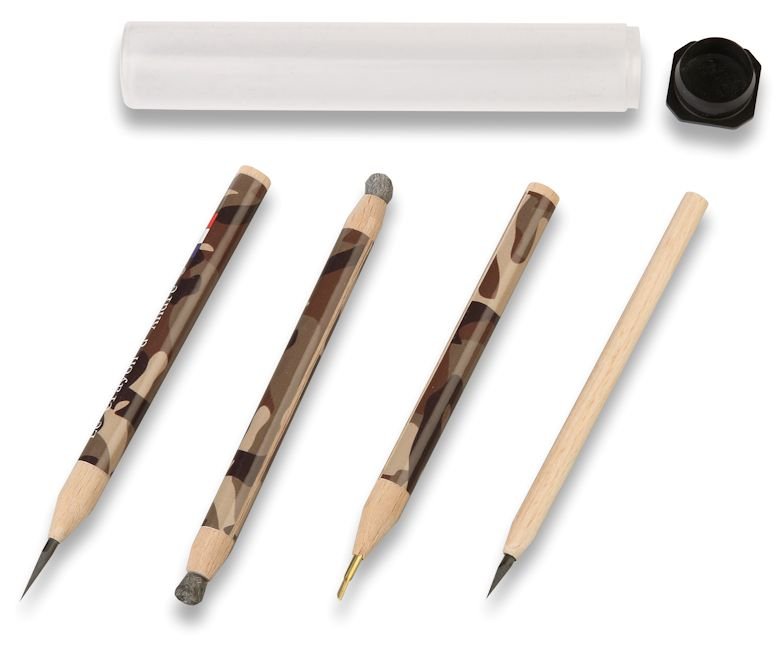
The 4-piece set from France contains pencils of different hardness for precise, material-friendly fine cleaning of coin details and reliefs.
- 4 pencils of different hardness
- Pinpoint detail cleaning
- Proven on coins, brooches & jewellery
- Made in France
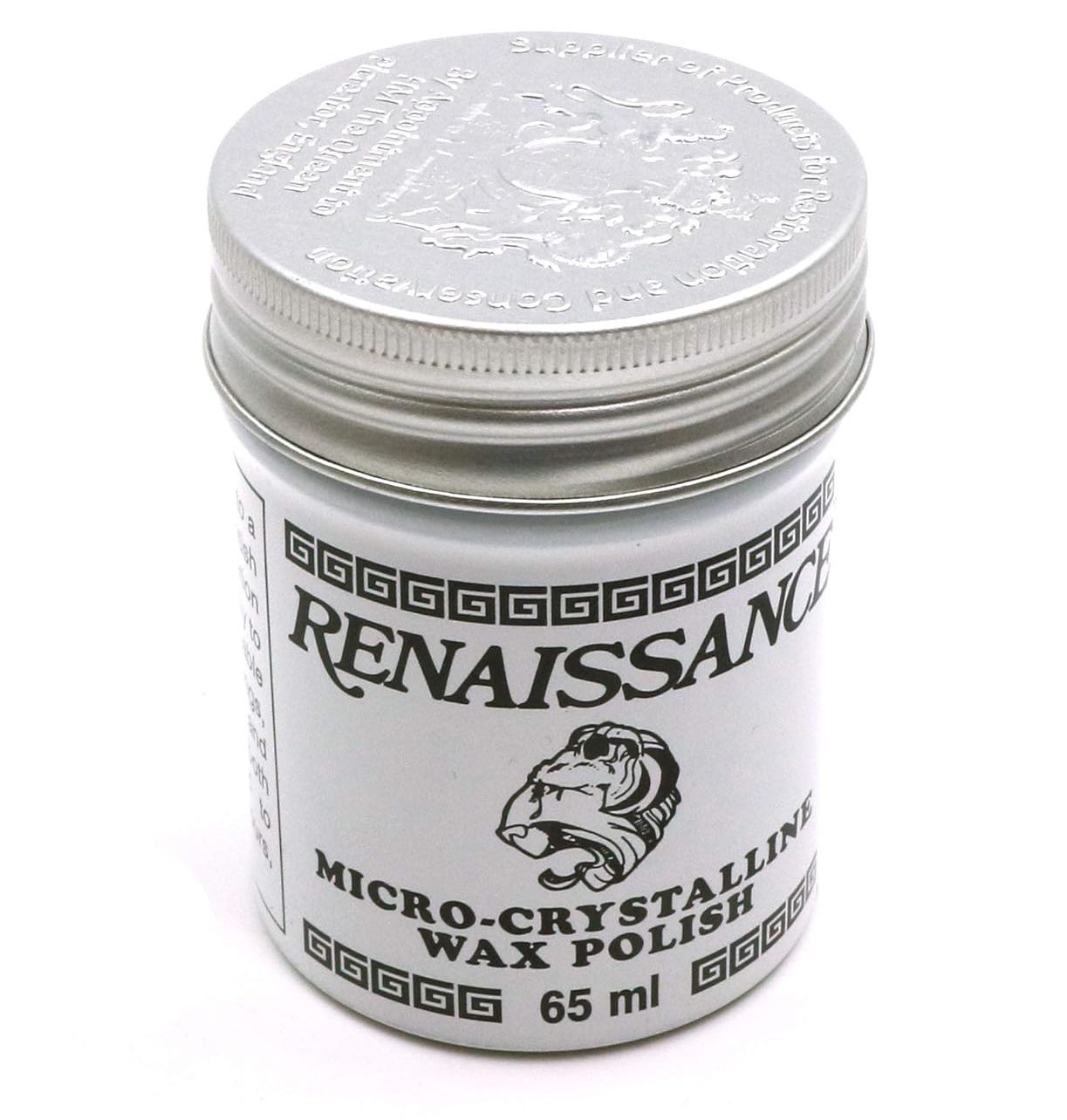
The original from London – used by museums and restorers worldwide. Forms a neutral protective layer that keeps out moisture and airborne pollutants without changing the patina.
- Museum standard – Picreator London
- Invisible, matt-neutral protective film
- For coins, jewellery, iron & bronze
- Fully preserves the patina
6 tips from 30 years of practical experience
What no textbook tells you – but every experienced detectorist learns sooner or later.
Patina is protection – not dirt
Dark green or brown patina is a chemically stable protective layer. Rubbing it off exposes bare, vulnerable metal. Preserve the patina, do not remove it.
Document immediately
Photograph the find directly in the ground – before recovering it. Note the GPS coordinates. This documentation is legally relevant and valuable for historical classification.
Test area first
With a new cleaning product: always test on an inconspicuous spot first. Not all bronzes have the same composition – some react more sensitively than expected.
Storage is decisive
Even a perfectly conserved find loses its protection in a damp cellar or an airtight plastic bag without desiccant. Silica gel sachets in coin boxes are a must.
Respect the soaking time
Conservo needs time. Anyone who starts scrubbing after two minutes risks scratches. Better: soak longer, then do less mechanical work afterwards. Patience is the most important tool.
Renew the wax layer every year
Renaissance Wax is durable, but not eternal. For pieces that are handled often, annual renewal is recommended: remove the old wax with a clean cloth and apply a fresh coat.
Applying Renaissance Wax correctly
The microcrystalline wax is easy to use – but a few points make the difference between a perfect result and a cloudy surface.
Dry the surface completely
After cleaning, the find must be absolutely dry – at least 24 hours at room temperature. Trapped moisture encourages mould and corrosion. Do not dry with hot air.
Take a tiny amount
Less is more. Using a clean, lint-free cotton cloth, take only a pinhead-sized amount of wax. The wax is highly concentrated and goes a very long way.
Apply thinly in circles
Apply the wax evenly and thinly in circular movements. Lightly cover all surfaces – including the reverse, edge and recesses. The wax will cloud slightly at first – this is normal.
Leave to dry for 5–10 minutes
Let the applied wax set briefly. Do not leave it in the sun – room temperature is ideal. The wax changes from cloudy to slightly transparent.
Polish with a clean cloth
Polish gently with a fresh, clean cotton cloth (not microfibre!). The wax becomes completely transparent. The patina now shows off beautifully.
Store dry and dust-free
Store the fully conserved find dry in a coin box or archive container. Add silica gel sachets. Objects conserved with Renaissance Wax are protected for years.
Questions from the detecting community
The most frequently asked questions about caring for finds – answered from experience.
All restoration products in one category
Discover the complete range of cleaning products, conservation waxes, brushes and tools for professional finds care – put together by detectorists for detectorists.