Gold panning, one of the last adventures of our time
Gold panning in Germany
One of the most beautiful adventures that nature has to offer
Gold panning has a centuries-old tradition in Germany – and it is more popular today than ever. We show you where to look, what you need and what to watch out for.
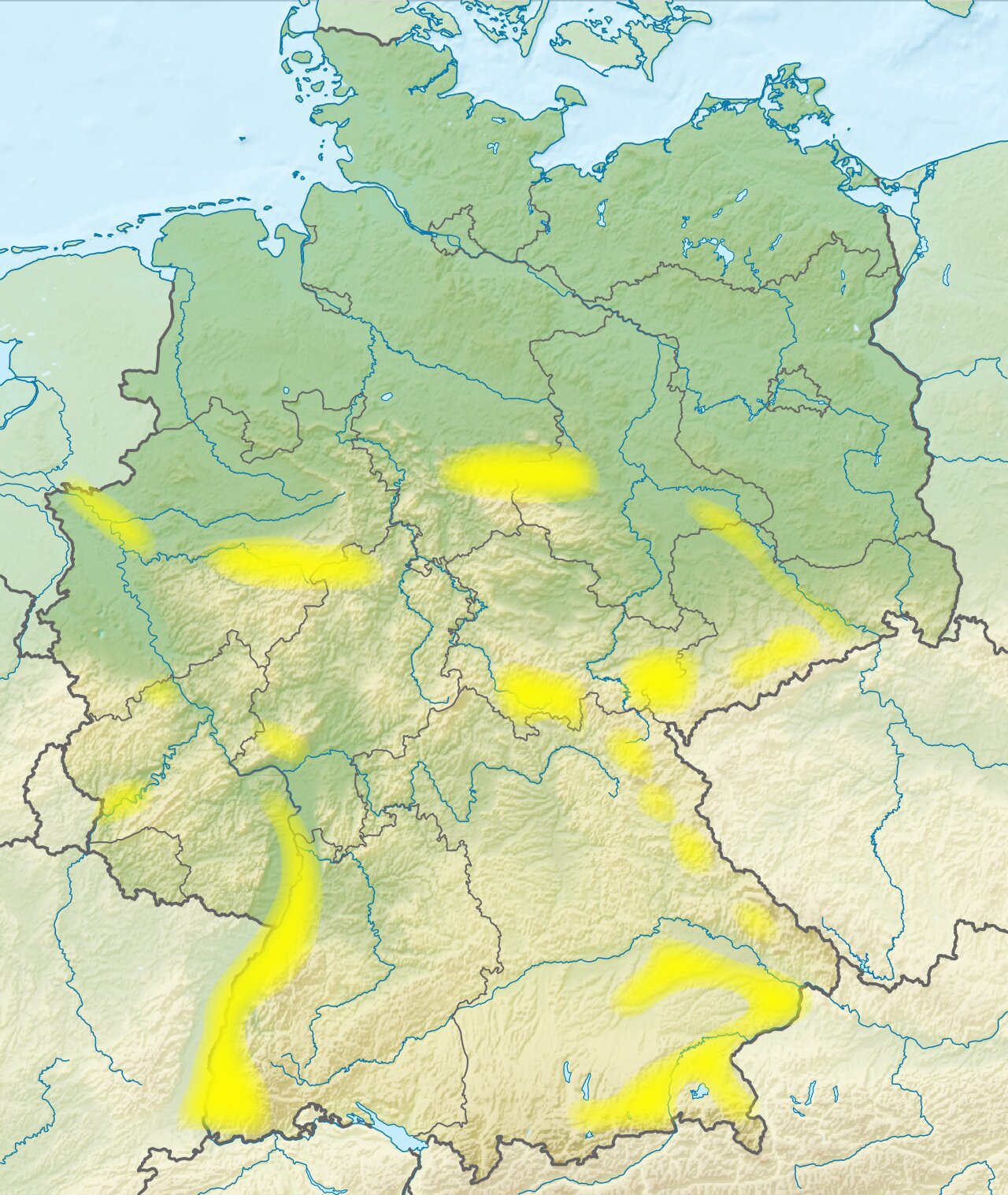
Seven German states have proven gold deposits. Most of it is fine placer gold that has been washed down from the mountains into the valleys over thousands of years.
BavariaDanube, Salzach, Alz, Windach, Ammer, Inn, Isar – the Alpine tributaries in Bavaria are among the best places to go. Recommended for beginners
ThuringiaSchwarza, Saale, White Elster, Werra. The Schwarza contains up to 4 g of gold per tonne of river sand. Up to 4 g/t in the Schwarza
Baden-WürttembergRhine (Basel–Mannheim) – around 514 tonnes of gold in its sediments. Germany's best-known gold river. Greatest potential
SaxonyElbe, Göltzsch, Striegis – around 16 mg of gold per tonne of gravel. Easy to combine with a trip to the Ore Mountains. Approx. 16 mg/t in Elbe gravel
HesseEder – historically around 20 kg mined, today about 22 mg per tonne of gravel. Easily accessible and attractive. 22 mg/t gravel
Saxony-Anhalt / Lower SaxonyAller, Saale – less well-known regions that are worth exploring for experienced gold prospectors. Exploration area
Step by step
How does gold panning work?
The basic principle is simple: gold is about seven times heavier than gravel and settles wherever the current slows down. Anyone can learn it with the right technique.
1
Choose the right spotGold collects on the inside bend of a river, behind rocks and in natural hollows – wherever the flow slows down.
2
Dig and sieve the materialUse a shovel and a hand trowel to take out the gravel and sand mix. A coarse sieve removes the largest stones.
3
Pre-concentrate with the sluiceThe sluice box uses the force of the water to separate heavy material from light material. This lets you process large quantities quickly.
4
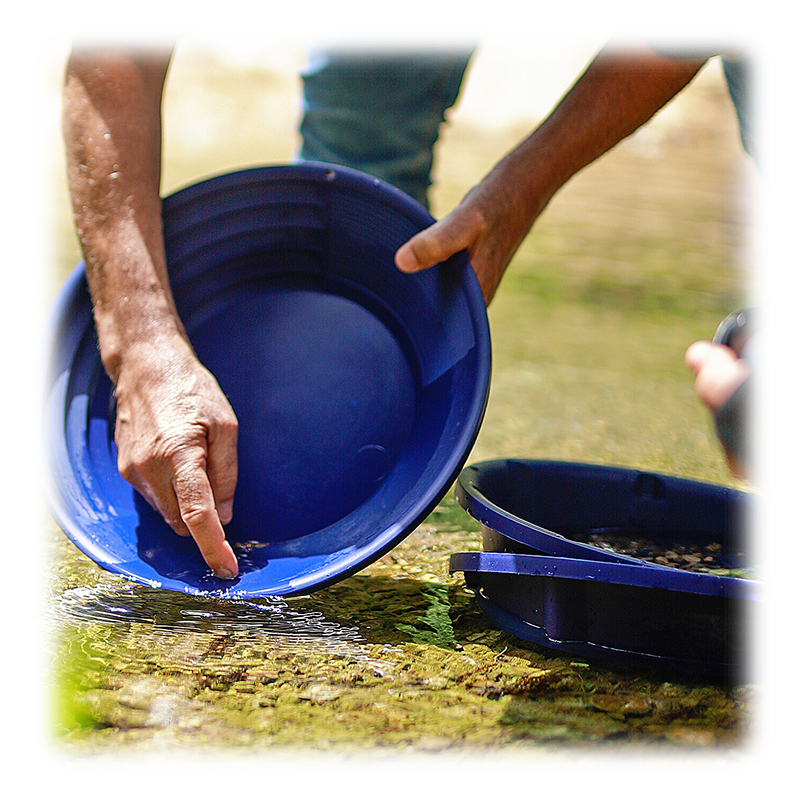
Fine panning in the panThe concentrate goes into the gold pan. Careful swirling separates the gold from the worthless rock.
5
Secure the gold – Glück auf!Pick up the fine gold flakes with a sniffer bottle and keep them in a collection vial. That way not a single grain is lost.
Why does gold settle right here?
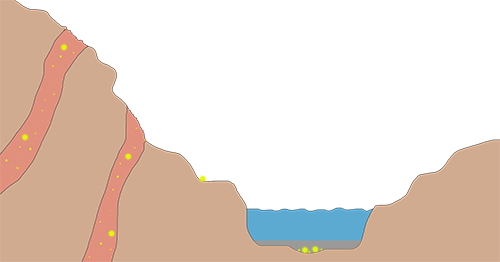
Gold has a specific gravity of 19.3 g/cm³ – about seven times that of sand (2.6 g/cm³). Even the slightest slowing of the current is enough for it to drop out.
19,3
g/cm³ – the specific gravity of gold. Sand is only 2.6 g/cm³.
On the outside bend the current carries material away – on the inside bend opposite, gold is deposited.
Waterfalls, cracks and potholes in the riverbed are natural gold traps.
Coarse cobble beds hold gold back – fine sand contains hardly any gold flakes.
The three most important types of spot
River bendsOn the inside bend the current slows down and gold settles. The classic place to start.
Waterfalls & poolsHeavy minerals collect below waterfalls. Patience pays off here.
Cracks & crevicesNatural hollows in the riverbed act as traps for gold. It is worth searching them carefully.
Equipment
The right equipment – for every level
If you arrive at the water well prepared, you will have far more fun and success.
Bestseller
XP gold panning 10-piece premium pro setPan, sluice, sieve, sniffer bottle, collection vial – all designed to work together.View product →
XP gold pan 37 cm – 4 panning zonesFour optimised panning zones for maximum gold recovery. Ergonomic and durable.View product →
XP sluice box VS140 vortex chambers catch gold from large amounts of material. Ideal for prospectors with stamina.View product →
XP classifier sieve 37 cm, 5 mm meshA perfect fit for the XP pan; reliably removes coarse gravel before fine panning.View product →
Gold detectors
Search even deeper with a detector
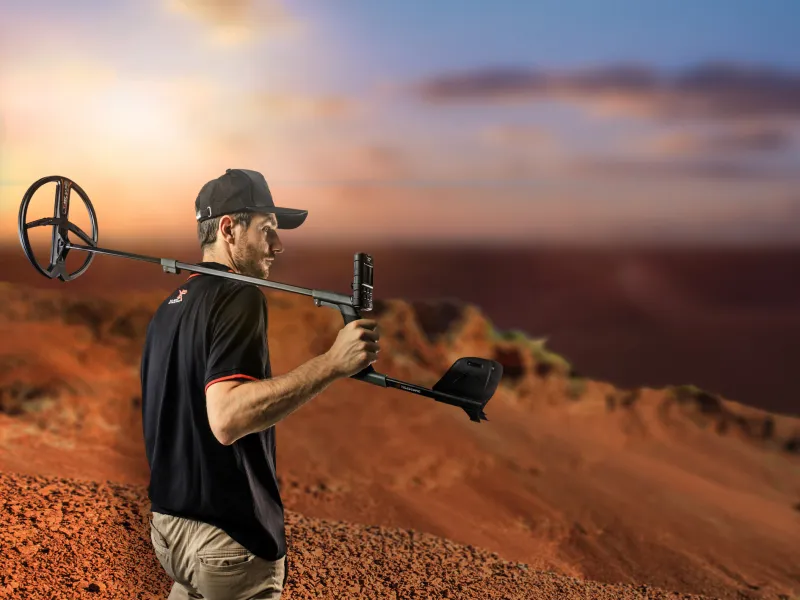
Specially tuned gold detectors find even the smallest nuggets in mineralised ground.
Garrett AXIOM – mono & DD coil setPulse induction detector for deep searching in difficult terrain.3.995,00 €View product →
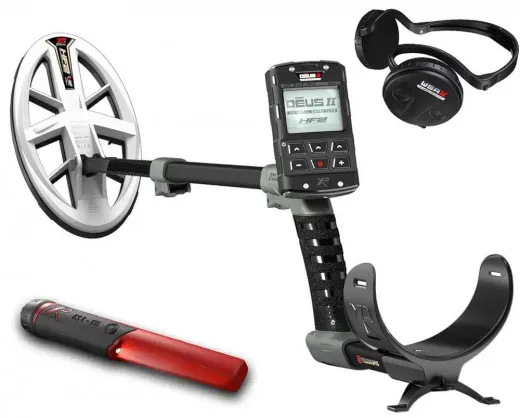
XP Deus II Gold HF2 RC WSA STWireless high-end detector with a multi-frequency coil.1.599,00 €View product →
XP ORX 24×13 ELL WSA – complete setPowerful gold detector at a fair entry price.799,00 €View product →
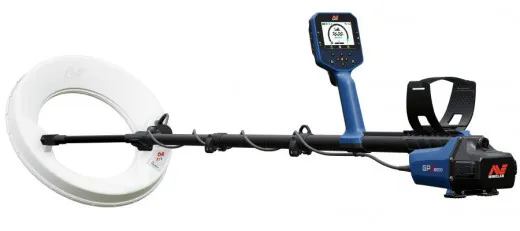
Minelab GPZ 8000™Fully automatic, highly sensitive to small gold – ready to use straight away.2.199,00 €View product →
Preparation
Checklist & what you should know about the law
Your equipment checklist
✓Gold pan (e.g. XP 37 cm)
✓Sluice box (e.g. XP VS1)
✓Coarse sieve (37 cm, 5 mm mesh)
✓Shovel and small hand trowel
✓Sniffer bottle for picking up fine gold
✓Collection vial / sample jar with lid
✓Wellington boots and warm socks
✓Warm clothing + a change of clothes in your bag
✓Backpack (waterproof recommended)
✓Enough food and drink
Code of conduct at the water
Leave no litter – and take any rubbish you find with you
Fill in the holes you dig
Do not dig into the riverbank
Leave your panning spot as you found it
Gold panning and the law
There is no law in Germany that generally prohibits gold panning in rivers. Nevertheless, clear rules apply:
Generally prohibited:
✗Entering nature reserves and private land
✗Disturbing fishing & closed breeding seasons
✗Removing trees & shrubs on the bank
✗Motorised highbankers (combustion & electric motors)
✗Fuel, engine oil & batteries near the water
Our tip: Ask the local public order office (Ordnungsamt) in advance which stretches of river are accessible. Note: this is not legal advice.
Background
How much gold is there in German waters?
According to economic geologist Dr Harald Elsner (BGR, the German Federal Institute for Geosciences and Natural Resources), German river sediments hold considerably more gold than is generally known.
514 tGold in the Rhine between Basel and Mannheim
4 g/tHighest gold content: Schwarza, Thuringia
102 tof gold historically mined from German ore
10 gLargest gold nuggets found in Germany
≥1 t/yrPossible annual yield of all gold-bearing rivers
7German states with proven gold deposits
Books
Success comes with the right knowledge
These books (in German) show you in detail where the most productive spots are in each region.
Gold in Thuringia – Dr Markus Schade (Gold in Thüringen)39,95 €Order →
Gold in Austria and South Tyrol (Gold in Österreich und Südtirol)29,95 €Order →
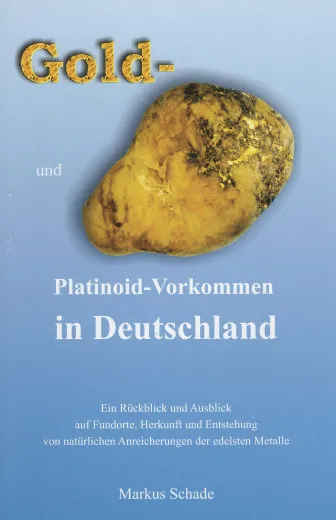
Gold and platinoid deposits in Germany (Gold- und Platinoid-Vorkommen in Deutschland)44,95 €Order →
FAQ
What else you might want to know
Is gold panning allowed in Germany? +
There is no law that generally prohibits gold panning in rivers. It is prohibited to enter nature reserves and private land, to disturb closed seasons and to use motorised equipment at the water.
Which river in Germany has the most gold? +
With an estimated 514 tonnes, the Rhine between Basel and Mannheim is considered Germany's richest gold river. For hobby prospectors, the Alpine tributaries in Bavaria and the Schwarza in Thuringia are particularly attractive.
What do I need to start gold panning? +
To get started, a gold pan, a sieve, a sniffer bottle and a collection vial are enough. Our XP 10-piece pro set contains everything in one package. Add wellington boots and warm clothing.
Where exactly in the river do I find gold? +
Gold collects where the current slows down: on the inside bend of a river, behind rocks, in natural hollows and below waterfalls. Coarse cobble beds hold gold back.
Is a gold panning course worth it for beginners? +
Absolutely. A good course saves you a lot of trial and error and frustration. Right at the water you learn how to recognise the right spot, how to use the technique and how to get the best out of your equipment. Take a look at our gold panning courses .
Ready for your first grain of gold?
Whether it is equipment, a course or personal advice – our team is happy to help Mon–Thu 9 am–5 pm and on Fridays until 12 noon (CET).