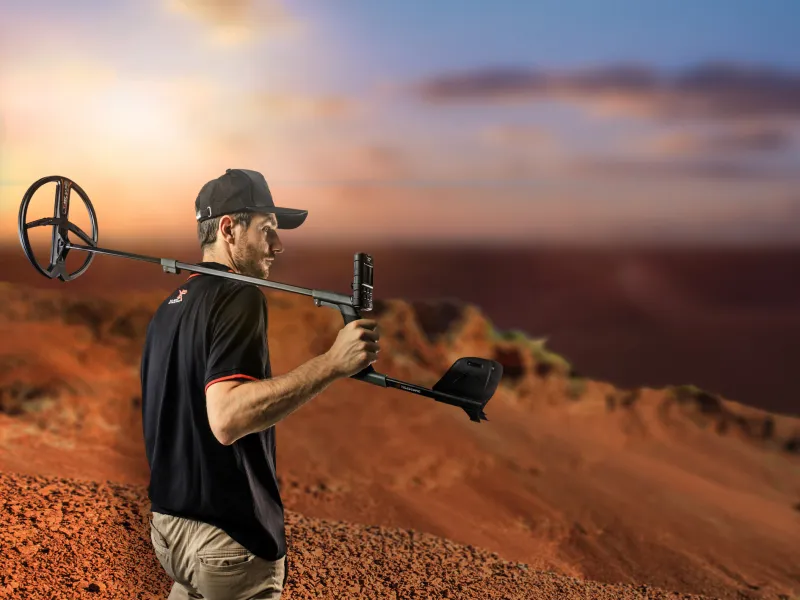
Searching for militaria with a metal detector: law, safety & the right equipment
The practical guide to searching for militaria and military-historical relics in Germany – with the legal situation, the right conduct when finding ammunition, suitable metal detectors and tips on research, documentation and conservation.
The key points in brief
- Allowed, but regulated: Searching for militaria with a metal detector is not prohibited in principle in Germany. But you always need the landowner's consent and – depending on the federal state – a research permit from the heritage authority.
- Treasure trove law in all 16 federal states: Archaeologically significant finds belong to the state. Bavaria was the last federal state to introduce the treasure trove law, in 2023.
- Never touch ammunition: If you suspect explosive ordnance, mark the find spot, keep your distance and call the police (110 in Germany) .
- Identity tags & remains: Stop searching immediately, change nothing, inform the police. The Federal Archives can identify names from identity tags.
- Equipment: Metal detectors with clean iron indication, good depth and precise pinpointing are in demand – for example multi-frequency detectors such as the XP DEUS II or Minelab Manticore.
Searching for historical military objects is one of the best-known areas of metal detecting. Uniform buttons, belt buckles, badges, pieces of equipment or soldiers' personal belongings often tell moving stories and give a very direct insight into the past.
At the same time, militaria hunting is the most sensitive area of the hobby. Heritage protection, criminal law, the dignity of the war dead and above all the danger from explosive ordnance demand expertise and a particularly responsible approach. This guide summarises what you need to know before your first search.
Never move, clean or transport suspicious objects. Whenever you suspect ammunition or explosive ordnance: mark the find spot, keep your distance and immediately inform the police (110) . No find is worth taking a risk with explosive ordnance.
What is meant by militaria?
Militaria are historical objects of military origin: parts of uniforms and equipment, badges, medals, identity tags, ammunition remains and soldiers' personal belongings. Finds from the ground are often also referred to as relics or military relics. In Germany, most finds date from the First and Second World Wars, but depending on the region also from much older conflicts.
- Uniform buttons
- Belt buckles
- Identity tags
- Medals & badges
- Equipment parts
- Cartridge cases
- Canteens & mess tins
- Helmets
- Coins from military camps
- personal belongings
Typical militaria finds by period
Thirty Years' War
Lead balls from muskets and pistols, buckles, fittings and coins from camps and areas troops passed through.
Napoleonic Wars
Uniform buttons, some with regiment numbers, lead projectiles, equipment fittings and coins along the march routes.
Franco-Prussian War
Buttons, projectiles from needle guns and Chassepot rifles, and equipment parts from training grounds and camps.
First World War
Buttons, badges, identity tags, shrapnel balls and cartridge cases – often on former military training areas and barracks sites.
Second World War
Belt buckles, identity tags, cartridge cases, fragments and equipment – this is where the risk from live ammunition is greatest.
Post-war period
Relics from the occupation and stationing period, such as badges and equipment of Allied troops, in the vicinity of former bases.
The appeal rarely lies in the material value. A simple uniform button or an identity tag can provide clues to units, places of deployment or a personal fate – provided the context of the find is properly documented.
Why does militaria hunting fascinate so many detectorists?
Many detectorists are less interested in the value of a find than in its story. Objects that have lain in the ground for decades or centuries create a direct link to the people who wore them, and can fill gaps in regional history.
At the same time, one should always remain aware: these are testimonies of war, suffering and death. Treating finds and find spots with respect therefore goes without saying.
Is militaria hunting allowed in Germany? The legal situation
There is no uniform federal law for searching with a metal detector. What counts are the heritage protection laws of the 16 federal states, some of which differ considerably. In addition, property, nature and forest law apply.
Research permit – the key term
In most federal states, targeted searching for archaeological monuments requires a permit. The permit is usually called a "Nachforschungsgenehmigung" (NFG, research permit) and is issued by the state office for heritage conservation or the lower heritage protection authority. In some states, such as Rhineland-Palatinate or North Rhine-Westphalia, a training course or a personal interview is a prerequisite, and the number of new permits per year is limited. Anyone who searches without the required permit commits an administrative offence.
What you must always observe
- Consent of the landowner – searching is not permitted without consent, ideally in writing.
- Heritage protection law of the federal state – observe it and obtain a research permit if necessary.
- Obligation to report archaeologically significant finds to the heritage authority.
- Treasure trove law: A treasure trove law now applies in all 16 federal states – significant finds become the property of the state upon discovery.
- Further regulations such as nature and landscape protection, forest law and the law on lost property also apply – a heritage permit does not replace them.
- Battlefields, camp sites, war graves and registered archaeological monuments are usually specially protected – searching there without a permit is prohibited.
Find out from the responsible heritage authority before every search. The legal situation changes – if in doubt, their information applies.
Explosive ordnance: the greatest danger when searching for militaria
The decisive difference between general treasure hunting and militaria hunting is the danger from Explosive ordnance. More than 80 years after the end of the war, large quantities of ammunition still lie in the ground: the explosive ordnance disposal service of Lower Saxony alone recorded around 231 tonnes of ordnance finds for 2025.
- Rifle & pistol ammunition
- Hand grenades
- Mortar bombs
- Artillery shells
- Panzerfausts
- Explosive devices
- Fuses
- Unexploded bombs
Despite their age, many of these objects are still dangerous. Ammunition can remain explosive for decades – corrosion does not make ammunition safe, and often makes it even more unstable. Even experienced detectorists often cannot tell for certain whether a find is still explosive.
Never touch, move, clean or transport it. If you have picked something up by mistake: put it down carefully – never throw it.
- Stop searching immediatelyDo not dig any further and keep a sufficient distance.
- Mark & secure the find spotMark the spot, note the GPS position and keep unauthorised people away.
- Inform the police on 110Give the exact location and follow the instructions. Reporting is free of charge for you.
- Wait for the assessmentThe police notify the explosive ordnance disposal service of the federal state.
Mere suspicion is enough for a report. Anyone who does not report explosive ordnance or takes it away may be committing a criminal offence and endangers others. You can find the responsible services of all federal states in our overview What to do when you find explosive ordnance.
Identity tag or human remains found – what to do?
Detectorists occasionally come across identity tags or even human remains. Then the search ends immediately. Leave the find spot unchanged and inform the police immediately.
The tasks of the former Deutsche Dienststelle (WASt) are now carried out by the German Federal Archives (Department of the German Reich, Berlin-Tegel site). It uses identity tags to determine the names of their former wearers. Together with the German War Graves Commission (Volksbund Deutsche Kriegsgräberfürsorge e. V.) , war dead are still identified and given a dignified reburial even decades later.
Why every single find counts
A properly reported identity tag can clarify the fate of a missing person and give relatives certainty after a long time. Anyone who takes such a find away on their own initiative or disturbs the find spot destroys precisely the clues needed for identification.
Collecting militaria: limits under criminal law
Collecting, buying and selling historical militaria is legal in principle in Germany. It becomes a criminal offence when symbols of unconstitutional organisations are used or distributed publicly (§ 86a of the German Criminal Code). Exceptions apply, among others, to science, research, teaching and historical reporting.
- Prohibited symbols must be made unrecognisable when presented publicly, in photos in forums and when sold.
- Collections with such symbols should be stored out of public view – not in a shop window or a room that can be seen into either.
- Live ammunition, explosives and parts that can be used as weapons are also subject to weapons, explosives and war weapons control law – they do not belong in a collection.
This information is for general guidance only and does not replace legal advice. If in doubt, you should seek expert advice.
Which metal detector is suitable for militaria hunting?
For militaria hunting, a metal detector with clean iron indication, good depth performance, stable running on mineralised ground and precise pinpointing is suitable. Because a large proportion of military relics are made of iron, experienced detectorists usually do without strong iron rejection – otherwise helmets, equipment parts or zinc and iron identity tags remain undiscovered. On former camp and combat areas, however, this means a lot of iron trash: patience and a detector with good separation pay off.
Versatile multi-frequency detectors and special deep-seeking detectors for larger objects have proven themselves. Which detector suits you depends on the type of ground, your budget and the area of use.
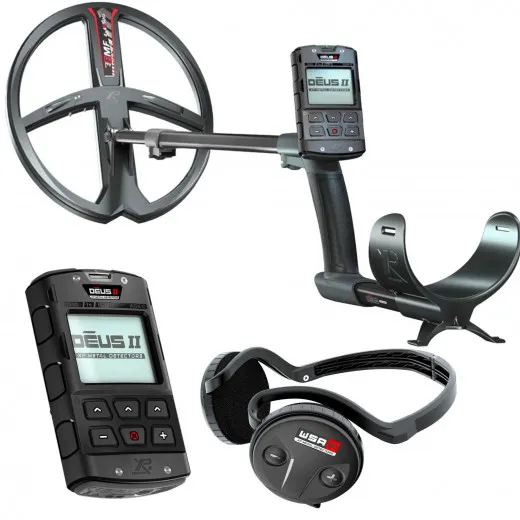
XP DEUS II 34 FMF RC WSA ST – complete set
Wireless FMF multi-frequency detector with its own Relic program, excellent iron indication and fine pinpointing – the versatile choice for militaria hunting.
View product
Minelab Manticore – high-end metal detector
Powerful multi-frequency technology with great depth and very stable running on mineralised ground – ideal for demanding relic and iron-find areas.
View product
XP XTREM Hunter XTR 115 – complete set
Deep-seeking detector for deep, larger metal masses – the addition when you want to search at greater depths on former camp or combat areas.
View productNot sure which detector suits your search area? We will advise you personally – from more than 30 years of our own practice as detectorists.
Research before the search: where can militaria be found?
Successful militaria hunting starts at the desk. Former camp sites, field positions, supply routes or troop movements can be narrowed down through thorough research – always check whether the area is protected or subject to a search ban.
Maps, aerial photos & LiDAR
Historical maps, wartime aerial photographs and LiDAR data from the geoportals show positions, trenches and bomb craters.
Archives & literature
War diaries, regimental histories, local chronicles and archive records provide the historical context.
Eyewitnesses & local knowledge
Accounts from eyewitnesses, local history societies and farmers supplement the written sources.
Documenting finds correctly
Without its context, a find loses a large part of its historical value. So note for every piece:
- Find spot (GPS coordinates) and date
- Depth of the find and nature of the ground
- Photos before and after recovery, with a scale
- Inscriptions, stamps, maker's marks or numbers
Cleaning and conserving militaria finds
Many finds have been exposed to moisture, fertiliser and soil acids for decades. Incorrect cleaning irretrievably destroys inscriptions and surfaces. You can find detailed methods in our guide Cleaning & conserving finds from the ground. The basic rules are:
- clean only dry and carefully at first
- do not use aggressive chemicals
- do not remove rust by force – for iron, a gentle electrolysis
- protect inscriptions and stamps
- have rare or delicate objects assessed and conserved professionally
Important: Ammunition parts are never cleaned or treated by electrolysis – they belong with the explosive ordnance disposal service.
Ethical responsibility in militaria hunting
Behind many finds lie personal fates, suffering and loss. Treating finds and find spots with respect therefore goes without saying – especially at places connected with the fallen or war graves. Responsible detectorists work together with heritage authorities and so often make a valuable contribution to regional history.
Frequently asked questions about relic hunting
Is searching for militaria with a metal detector allowed in Germany?
Yes, in principle – but only with the landowner's consent and in compliance with the heritage protection law of the federal state concerned. In most federal states, a research permit from the heritage authority is required for targeted searching. Searching without a permit is prohibited on archaeological monuments, battlefields and war graves.
Do I need a permit to search for militaria?
In most federal states, yes. The research permit is applied for at the state office for heritage conservation or the lower heritage protection authority. In some cases, a training course or a personal interview is a prerequisite. Ask your responsible authority before your first search.
Can I keep militaria I have found?
That depends on the find. Archaeologically or historically significant finds fall under the treasure trove law in all 16 federal states and belong to the state; they must be reported. For ordinary finds, the rights of the landowner and the law on lost property must be observed. You must not simply take away ammunition, weapon parts or identity tags.
What do I do if I find ammunition?
Do not touch it, move it or clean it. Stop searching, mark the find spot, keep your distance and call the police on 110 (Germany). The police will notify the explosive ordnance disposal service. Reporting is free of charge for you.
Is old Second World War ammunition still dangerous today?
Yes. Ammunition can remain explosive for decades, and corrosion can even make fuses and explosives more unstable. Whether a find is still explosive cannot be reliably determined from the outside – so every suspicion counts as an emergency.
What should I do with an identity tag I have found?
If the tag is found together with human remains, stop searching immediately and inform the police. You can report individual identity tags to the German Federal Archives, which has taken over the tasks of the former Deutsche Dienststelle (WASt) and identifies the names of their former wearers. The German War Graves Commission (Volksbund) provides support with war dead.
Can I collect or sell finds with Nazi symbols?
Possession and collecting are permitted in principle. However, symbols of unconstitutional organisations may only be displayed publicly, distributed or offered for sale if they are made unrecognisable (§ 86a of the German Criminal Code), except for legal exceptions such as science and teaching.
Which metal detector is suitable for militaria?
Multi-frequency metal detectors with clean iron indication, good depth and precise pinpointing are well suited, such as the XP DEUS II or the Minelab Manticore. For large, deep objects, deep-seeking detectors such as the XP XTREM Hunter are an option.
Should I reject iron when searching for militaria?
Usually not completely. Many militaria items are made entirely or partly of iron – such as helmets, equipment parts and fittings. Experienced detectorists therefore leave iron audible or use only light discrimination and tell signals apart by tone.
Conclusion
Searching for militaria with a metal detector combines historical research, exciting discoveries and the chance to understand past events better. But it requires expertise, knowledge of the legal situation and a high degree of responsibility.
Anyone who knows the regulations, takes dangers seriously and treats finds with respect gains a fascinating insight into history. Safety always comes first: no find is worth taking risks with explosive ordnance or disregarding legal requirements.
Good militaria hunters can therefore be recognised not by the number of their finds, but by their expertise, patience, careful documentation and responsible handling of the testimonies of history.
Sources & further contacts
- Explosive ordnance disposal service of Lower Saxony (LGLN) – annual statistics 2025
- German Federal Archives – personal records of military origin and research on identity tags
- German War Graves Commission (Volksbund Deutsche Kriegsgräberfürsorge e. V.)
- Bavarian State Office for Monument Protection – treasure trove law (since 2023)
- § 86a of the German Criminal Code – use of symbols of unconstitutional organisations